
Polyaspartic Garage Floor Coating vs Epoxy: Cost and Cure
Polyaspartic vs epoxy for a garage floor: what polyaspartic is, one-day installs, UV stability, pot life, pro cost per sq ft, and why DIY application is hard.
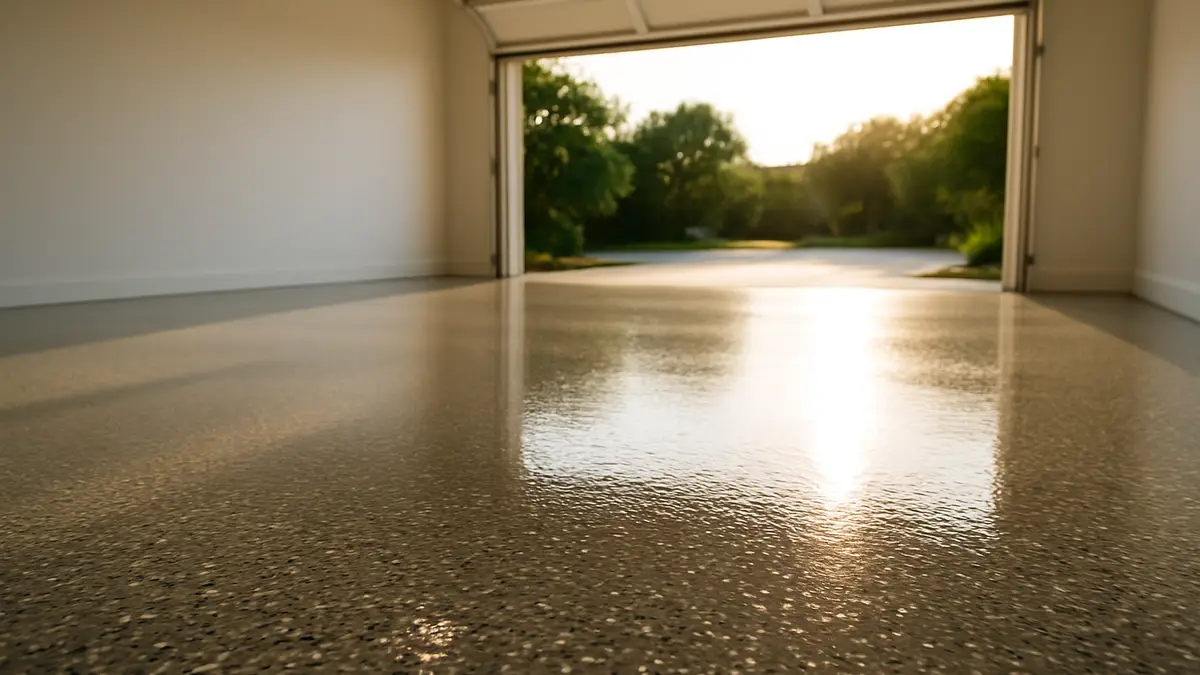
Polyaspartic is the coating behind most “one-day garage floor” offers, and it is often sold as a straight upgrade over epoxy. It is better at some things and worse at others. This page explains what it is, compares it with epoxy on published numbers, and says who should not pay for it.
What is a polyaspartic floor coating?
A polyaspartic floor coating is a two-part aliphatic polyurea coating, made with polyaspartic esters, that cures in hours and stays clear in sunlight. The chemistry dates to the early 1990s, with patents issued to Bayer in Germany and Miles Corporation in the United States.
The amine and isocyanate in pure polyurea react almost instantly, which is why pure polyurea needs specialized plural-component spray equipment. Polyaspartic esters are built to slow that reaction down, giving a working window long enough to roll or squeegee the coating by hand. Because the isocyanates used are aliphatic, the cured film resists yellowing under UV light. On a garage floor it is used as a clear or pigmented coat, usually over a broadcast of vinyl color flakes or quartz.
How do polyaspartic and epoxy compare?
Polyaspartic wins on cure speed and sun resistance; epoxy wins on working time and DIY material cost. The table uses one maker’s DIY kits for like-for-like numbers, plus Bob Vila’s figures for pro installs.
| Epoxy (100% solids) | Polyaspartic | One-part polyurea hybrid | |
|---|---|---|---|
| Example product | ArmorPoxy ArmorClad | ArmorPoxy Polyaspartic Medium Broadcast | ArmorPoxy SPGX |
| Pot life | 15 to 20 min | 10 to 15 min | No mixing, long working time |
| Recoat | 24 h (window 3 to 5 days) | 2 to 4 h | 4 to 12 h |
| Walk on | 24 h | 2 to 4 h | 72 h |
| Drive on | 72 h | 48 h (kit); about 24 h for pro systems | 72 h |
| UV yellowing | Yellows in sunlight | UV stable | Non-yellowing, not for constant sun |
| DIY cost per sq ft (Oct 2026) | $1.33 to $2.00 | $1.98 to $3.30 | about $2.40 |
| Pro installed per sq ft | $3 to $12 | $4 to $9 | Sold as a DIY kit |
Kit figures come from ArmorPoxy’s product pages (October 2026). Pro prices and the 24-hour pro drive-on figure come from Bob Vila’s 2024 cost guides. For full epoxy pricing by garage size, see our epoxy garage floor cost guide.
Why is polyaspartic hard to apply yourself?
Polyaspartic is hard to DIY because it starts setting before an inexperienced applier finishes a section. Bob Vila describes it setting in about 10 minutes, and ArmorPoxy’s kit lists a 10 to 15 minute pot life with an application range of 45 to 90 degrees F. On a warm day the window shrinks further.
Three habits make a DIY polyaspartic floor workable:
- Mix small batches sized to what you can spread in a few minutes, rather than a full kit at once.
- Work with a helper: one person cuts in edges while the other rolls or squeegees.
- Plan an exit path before you open the cans, because the first coat and flake broadcast cannot pause.
ArmorPoxy markets its kit as DIY friendly, and the one-part SPGX hybrid exists to remove the pot-life problem at the cost of a 72-hour wait for cars. If you want unhurried working time, epoxy is the easier material; our epoxy application guide covers the full process.
What does a one-day polyaspartic install include?
A one-day install packs prep, repair, basecoat, flake and topcoat into a single visit because each coat is ready for the next within hours. A typical sequence:
- Mechanical prep. Garage Force, a polyurea installer, says it shot blasts every floor to a CSP 3 concrete profile.
- Crack and joint repair with a fast-setting filler.
- Basecoat, then a broadcast of color flakes into the wet coat.
- Scrape and vacuum the loose flakes.
- Clear polyaspartic topcoat.
Foot traffic returns in about 3 to 4 hours and cars in about 24 (Bob Vila). Garage Force notes that new concrete needs 30 days to cure before coating and that its warranties depend on documented moisture testing. Ask any installer which chemistry each of the five layers uses: “polyurea” and “polyaspartic” are used loosely in sales material, and some systems put a polyaspartic topcoat over an epoxy base.
How long does polyaspartic last compared with epoxy?
There is no independent long-term test to quote, so treat every lifespan number as a claim. Bob Vila’s January 2024 guide puts epoxy at 5 to 10 years and says polyaspartic lasts over a decade. Installers go further: Garage Force cites Croc Coatings at 20 to 25 years for professional polyaspartic, and says retail epoxy kits can fail in as little as 2 years. Both companies sell polyaspartic floors.
The failure modes are better documented than the lifespans. Garage Force names moisture vapor coming up through the slab as the number one cause of coating failures, and also blames poor surface prep and under-cured coatings. It also notes that tires can reach about 140 degrees F in summer, which is when weak bonds show up as hot tire pickup. Those causes apply to any coating, which is why prep matters more than the label.
Is polyaspartic worth the extra cost?
Polyaspartic is worth it when sun exposure or downtime matters, and often not when neither does. Installed prices overlap: $4 to $9 per sq ft for polyaspartic against $3 to $12 for epoxy (Bob Vila, 2024), so a quote for a flake epoxy system with a good topcoat may cost about the same as a polyaspartic floor.
Pick polyaspartic if:
- Your garage door faces the sun and stays open, since epoxy yellows under UV.
- You cannot give up the garage for 3 to 4 days.
- You are hiring a pro anyway and the quotes are close.
Pick epoxy if you are doing it yourself in a shaded garage and want the lowest material cost per square foot. Our garage floor epoxy kit comparison covers which kits hold up.
Who should not choose polyaspartic?
Skip polyaspartic, and any bonded coating, if the slab has a moisture problem you have not solved, if it is cracked and moving, or if you rent. A first-time DIYer working alone in summer heat is also a poor match for a 10 to 15 minute pot life.
For a damp or cracked slab, a floating floor avoids the bond problem entirely; see garage floor tiles vs mats. For every surface option on one page, start with our garage floor coating comparison.
Where do these numbers come from?
We did not coat test floors; every figure is attributed. Chemistry and history: the Wikipedia article on polyaspartic esters, which cites the Bayer and Miles patents. Kit specifications and prices: ArmorPoxy product pages for ArmorClad, Polyaspartic Medium Broadcast and SPGX Polyurea, checked October 2026. Pro prices, cure times and lifespan statements: Bob Vila’s polyaspartic floor coating cost guide (January 31, 2024) and epoxy garage floor cost guide (April 26, 2024). Installer statements on prep, moisture, hot tires and lifespan: Garage Force articles published September 2026.
Frequently asked questions
Quick answers to what readers ask us most
Is polyaspartic better than epoxy for a garage floor?
For a sun-exposed garage or a one-day install, yes: polyaspartic resists UV yellowing and takes cars after about 24 hours. Epoxy is cheaper as a DIY material and gives you more time to work, so it suits a careful DIYer with an indoor garage and a few days to spare.
Is polyaspartic the same as polyurea?
Polyaspartic is a modified polyurea. Pure polyurea reacts so fast it needs plural-component spray rigs; polyaspartic esters slow the reaction so the coating can be rolled or squeegeed. Installers use both names loosely, so ask a quote to name each layer.
Can I apply polyaspartic myself?
You can, but it is less forgiving than epoxy. ArmorPoxy's DIY polyaspartic kit lists 10 to 15 minutes of pot life and an application range of 45 to 90 degrees F. Mix small batches, work with a helper, and plan the room layout before you open the cans.
How long does a polyaspartic garage floor last?
Nobody publishes independent long-term tests. Bob Vila puts epoxy at 5 to 10 years and says polyaspartic lasts over a decade; installers claim up to 20 to 25 years. Prep and moisture control decide real lifespan more than the coating label.
How much does polyaspartic cost per square foot?
Installed, about $4 to $9 per sq ft (Bob Vila, January 2024), or roughly $2,300 to $5,200 for a 24 x 24 ft two-car garage. DIY polyaspartic kits ran about $2 to $3.30 per sq ft of rated coverage in October 2026.