
Best Garage Heaters: Electric, Propane and Natural Gas
Garage heater picks by fuel and size: 120V plug-in, 240V hardwired, vented gas and portable propane, with BTU per square foot, energy use and CO safety.
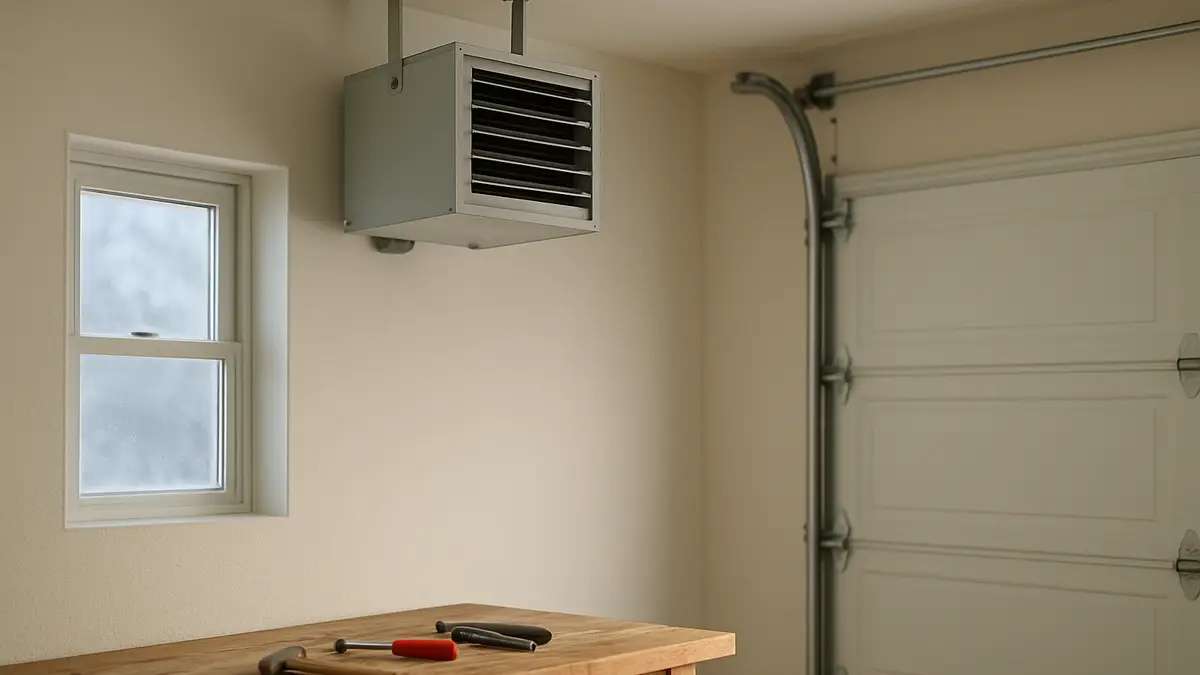
A garage heater is a space heater built for an unconditioned, often uninsulated room with a large door. Picking one comes down to three choices: the fuel your garage can get (120V, 240V, natural gas or propane), the size of the space and how well it holds heat, and whether the unit is vented. Picks below are chosen on published specs and manual requirements; we did not run heat tests of our own.
Which garage heater should you buy?
Buy by fuel first, then by size. The table lists one or two named units per category with the maker’s own figures and prices seen in October 2026.
| Heater | Fuel and power | Output | Maker-rated area | Venting | Price seen Oct 2026 |
|---|---|---|---|---|---|
| Dr. Infrared DR-218-1500W | 120V plug-in | 1,500 W (5,118 BTU/h) | Not stated | None needed | $119.99 (maker) |
| Fahrenheat FUH54 | 240V hardwired | 5,000 W (17,060 BTU/h) | 500 sq ft | None needed | About $330 to $500 |
| Dr. Infrared DR-975 | 240V hardwired | 4,700 or 7,500 W (up to 25,590 BTU/h) | 800 sq ft | None needed | About $240 to $350 |
| Modine Hot Dawg HD45 | Natural gas or propane, 115V fan | 45,000 BTU/h input, 36,000 output | 2 to 2.5-car garage | Power-vented | About $935 to $1,440 |
| Mr. Heater Big Maxx MHU50NG | Natural gas (propane kit included), 115V fan | 50,000 BTU/h input | Up to 1,667 sq ft | Vented | $913.87 list; $452.79 at Home Depot |
| Mr. Heater Big Buddy MH18B | Propane cylinders | 4,000 / 9,000 / 18,000 BTU/h | Up to 450 sq ft | Unvented | About $135 to $170 |
Electric output in BTU/h uses 1 W = 3.412 BTU/h. Gas figures are input ratings unless marked as output.
What size garage heater do you need?
Size the heater to your floor area, then adjust for insulation. The makers’ own coverage ratings disagree by about two to one, and that spread is the honest range to plan within:
- Fahrenheat rates the 5,000 W FUH54 for 500 sq ft, about 34 BTU/h of output per sq ft (10 W per sq ft).
- Dr. Infrared’s DR-975 listing gives 800 sq ft for 7,500 W, about 32 BTU/h per sq ft.
- Mr. Heater rates the 50,000 BTU MHU50 for up to 1,667 sq ft, 30 BTU/h of input per sq ft.
- Modine puts the HD45, 36,000 BTU/h of output, in a 2 to 2.5-car garage: about 62 BTU/h per sq ft in a 24 x 24 ft garage.
| Garage (from our garage dimensions guide) | Area | Insulated: about 34 BTU/h per sq ft | Cold or drafty: about 62 BTU/h per sq ft |
|---|---|---|---|
| 1-car, 12 x 22 ft | 264 sq ft | 9,008 BTU/h (2,640 W) | 16,500 BTU/h (4,836 W) |
| Compact 2-car, 20 x 20 ft | 400 sq ft | 13,648 BTU/h (4,000 W) | 25,000 BTU/h (7,327 W) |
| Typical 2-car, 24 x 24 ft | 576 sq ft | 19,653 BTU/h (5,760 W) | 36,000 BTU/h (10,551 W) |
| 3-car, 32 x 24 ft | 768 sq ft | 26,204 BTU/h (7,680 W) | 48,000 BTU/h (14,068 W) |
Plan toward the left column for an insulated garage with a sealed door and toward the right for bare stud walls, a high ceiling or a cold climate. Modine’s own chart steps up to the 60,000 BTU/h HD60 (48,000 output) for a 3 to 3.5-car garage, which matches the right column.
Is a 120V plug-in heater enough for a garage?
A 120V plug-in heater is enough for spot heat at a workbench, not for a whole two-car garage. Plug-in heaters for standard outlets are sold at up to 1,500 W, which draws 12.5 A on 120V and delivers 5,118 BTU/h. At the 10 W per sq ft that electric makers rate by, that covers about 150 sq ft.
Pick: Dr. Infrared DR-218-1500W. It plugs into a standard NEMA 5-15 outlet, has an adjustable thermostat, overheat protection and an IPX4 splash rating, and listed at $119.99 on the maker’s site in October 2026. Despite the brand name, the maker describes it as a fan-forced heater, not a radiant one. Do not buy the DR-218-3000W by mistake: it is the 240V version and needs a NEMA 6-20 outlet on a 20 A circuit.
Not for: heating a full garage, or sharing an outlet with a compressor or saw. Give it a circuit with nothing else running.
Which 240V electric heater fits a two-car garage?
A 240V hardwired heater of 5,000 to 7,500 W fits most insulated one- and two-car garages, and it needs no vent, no fuel and no combustion air. It does need a dedicated 240V circuit installed by a licensed electrician to the manual and local code.
Pick for up to about 500 sq ft: Fahrenheat FUH54. 5,000 W (17,060 BTU/h) with a built-in thermostat that adjusts from 45 to 135 degrees F, an automatic fan delay so it does not blow cold air on startup, an overheat cutout, and a ceiling bracket that aims it horizontally, vertically or in between, mounted at least 6 ft up. At 240V it draws about 20.8 A.
Pick for larger or colder garages: Dr. Infrared DR-975. Two settings, 4,700 W or 7,500 W (up to 25,590 BTU/h), a remote-controlled thermostat from 50 to 85 degrees F, and five adjustable louvers; it mounts on a wall or ceiling. At 7,500 W it draws about 31.3 A, so it needs a bigger circuit than the FUH54.
Not for: a garage whose panel has no spare capacity for a 240V circuit. In that case compare the cost of the electrical work with a gas unit.
Is a natural gas or propane unit heater worth it?
A vented gas unit heater is worth it in a cold climate, in a large or poorly insulated garage, or anywhere you would need more than about 7,500 W of electric heat. It pushes combustion gases outside through a vent, so the garage air stays clean, and it delivers far more heat per circuit than electric.
Pick: Modine Hot Dawg HD45. 45,000 BTU/h input and 36,000 BTU/h output on Modine’s spec sheet, power-vented through a small-diameter pipe out a side wall or the roof, installs 1 in. from the ceiling on two brackets, and runs on natural gas or propane depending on the version. It needs 115V for the fan. Online HVAC retailers listed it at about $935 to $1,440 in October 2026.
Alternative: Mr. Heater Big Maxx MHU50NG. 50,000 BTU/h input, natural gas with a propane conversion kit included, Category 1 vertical or Category 3 horizontal venting, and a minimum of 8 ft from the floor to the base of the heater. Mr. Heater lists 3 years on parts and burners and 10 years on the heat exchanger.
Gas lines, venting and clearances are licensed work in most places: install per the manual, local code and a licensed pro.
Not for: a garage with less than about 8 ft of ceiling under the unit, or a household without gas service and no plan for a propane tank.
Can you use a portable propane heater in a garage?
You can use some portable propane heaters in a garage for short, occasional sessions, but an unvented heater releases its combustion gases, including carbon monoxide, into the room. Treat it as a temporary heater, not a winter solution.
Pick for occasional use: Mr. Heater Big Buddy MH18B. Three settings (4,000, 9,000 and 18,000 BTU/h), rated for up to 450 sq ft, with a low-oxygen shutoff (ODS) and a tip-over shutoff. Its manual describes it as an unvented heater that uses the oxygen in the room, requires a vent opening of at least 18 sq in. (for example 4 1/4 x 4 1/4 in.) during operation, and says not to use other fuel-burning appliances inside. The same manual says propane cylinders must not be stored in a building or garage.
Run a battery CO alarm, crack the door or a window, and never use it with a car idling, while sleeping, or around open fuel, solvents or paint. Kerosene and diesel “torpedo” heaters are also unvented and sized for job sites; their manuals call for ventilation, and a closed garage is not the place for one.
Is an infrared garage heater better than forced air?
An infrared heater is better when you work in one spot or open the door often; forced air is better for warming the whole room. Radiant heaters warm the people and objects they face rather than the air, so the warmth comes back quickly after the door closes. Forced-air heaters like the FUH54, DR-975 and HD45 heat the air and need time to bring the whole garage up to temperature.
Check the spec sheet rather than the brand name: Dr. Infrared’s DR-218 and DR-975 are fan-forced units. And whichever type you buy, size it with the table above.
What does a garage heater cost to run?
Running cost is energy per hour times your rate. Converting each heater to energy used per hour lets you price it with the numbers on your own bills:
| Heater at full output | Energy used per hour | Heat delivered |
|---|---|---|
| DR-218-1500W | 1.5 kWh | 5,118 BTU/h |
| Fahrenheat FUH54 | 5 kWh | 17,060 BTU/h |
| Dr. Infrared DR-975 on 7,500 W | 7.5 kWh | 25,590 BTU/h |
| Modine HD45, natural gas | 0.45 therm | 36,000 BTU/h output |
| Mr. Heater MHU50 on propane | About 0.55 gal | 50,000 BTU/h input |
| Big Buddy MH18B on high | About 0.2 gal propane | 18,000 BTU/h input |
A therm is 100,000 BTU, and the US Energy Information Administration puts a gallon of propane at 91,452 BTU. Example: at 18 cents per kWh, the FUH54 costs 90 cents for every hour it runs at full output; a thermostat cuts the actual hours.
What should you fix before buying a heater?
Fix the air leaks and the door first, because every BTU that leaks out has to be bought again. Gaps under and around the door, an uninsulated steel door and bare stud walls move a garage from the left column of the sizing table toward the right. Walls and ceiling by climate zone are covered in our garage insulation guide.
A steel pan door with no insulation loses about 1,890 BTU/h across a 9 x 7 ft single door at a 30 degree F difference, and about 236 BTU/h with an R-8 kit, according to the heat-flow math in our garage door insulation kit guide. If the door is due for replacement anyway, factory-insulated doors are compared in our insulated garage doors guide. Replace the bottom seal and side weatherstrip at the same time; seal types are in our garage door weather stripping guide.
Where do these numbers come from?
We did not test these heaters; figures are attributed. Dr. Infrared DR-218 specs and price: drheaterusa.com, October 2026. DR-975 specs: maker listing at ilivingusa.com and retailer listings (coverage and price range), October 2026. Fahrenheat FUH54: retailer spec listings (output, 500 sq ft rating, thermostat range, mounting) and prices, October 2026. Modine Hot Dawg input, output, typical applications and mounting: Modine Hot Dawg specification brochure; prices from online HVAC retailers, October 2026. Mr. Heater MHU50 and MH18B specs, venting and warranty: mrheater.com, October 2026; MH18B ventilation and cylinder storage text from its owner’s manual; retail prices from Home Depot, Lowe’s and Walmart listings, October 2026. Unit conversions: 1 W = 3.412 BTU/h; propane 91,452 BTU per gallon and 1 therm = 100,000 BTU (US EIA). Door heat loss: GarageWise calculation, Q = area x temperature difference / R.
Frequently asked questions
Quick answers to what readers ask us most
What size heater do I need for a 2-car garage?
For a 24 x 24 ft garage (576 sq ft), the makers' own ratings point to about 19,700 BTU/h (5,760 W) when the garage is insulated and up to about 36,000 BTU/h when it is cold and drafty. A 5,000 to 7,500 W electric heater or a 45,000 BTU input gas unit covers that range.
Can a 120V heater heat a garage?
Only a small area. Plug-in 120V heaters are sold at up to 1,500 W, which is 5,118 BTU/h and enough for about 150 sq ft at the 10 W per sq ft that electric heater makers rate their units by. In a two-car garage, a 1,500 W heater is spot heat for a workbench.
Is it safe to use a propane heater in a closed garage?
An unvented propane heater releases combustion gases, including carbon monoxide, into the garage. Use only a model rated for the space, follow its ventilation rule (the Mr. Heater Big Buddy manual requires an 18 sq in. opening), run a CO alarm, and never sleep or idle a car with it running.
Is electric or gas cheaper to run in a garage?
It depends on local rates. A 5,000 W heater uses 5 kWh per hour. A Modine HD45 uses 0.45 therm of natural gas per hour to deliver about 36,000 BTU/h. Multiply by the rates on your bills; where gas is cheap, a vented gas unit usually costs less per hour of heat.
Do I need an electrician for a garage heater?
For any 240V hardwired heater, yes: it needs a dedicated circuit sized to the manual and local code. Gas unit heaters need a gas line and a vent run, which is licensed work in most places. Only a 120V plug-in heater is a no-install purchase.