
Garage Gym Setup: Ceiling, Flooring, and Climate
How to set up a garage gym: the ceiling height a rack and pressing need, flooring by lift type, climate control for a two-car garage, and a realistic layout.
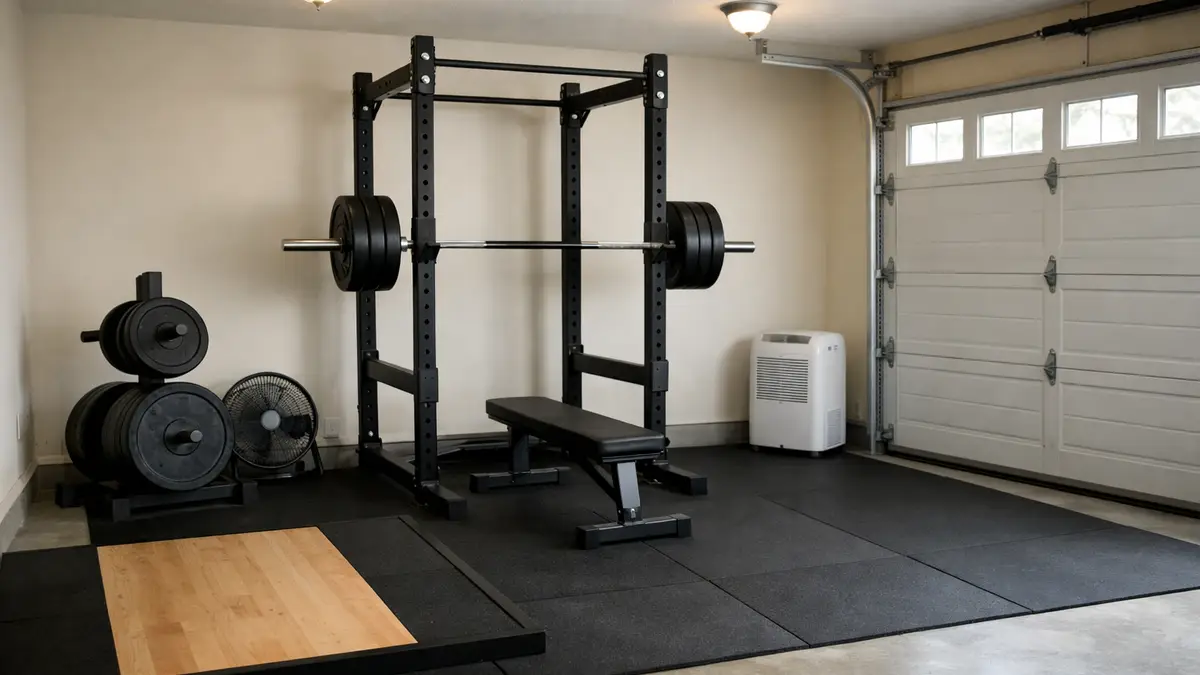
A garage gym turns one or two bays into a training space, and the three things that decide whether it works are ceiling height, flooring and climate. Equipment is the easy part. The constraints lifters hit after buying a rack are that they cannot press overhead, that dropped weights chip the slab, or that bars rust over a damp winter. This guide sizes the space around those first.
How much ceiling height does a garage gym need?
About 9 ft for a lifter who presses overhead or does pull-ups; 8 ft works for everything else. A power rack stands around 90 to 93 in. tall, so it fits under an 8 ft (96 in.) ceiling with inches to spare. The problem is what you do above it: pressing a barbell overhead while standing adds your reach above the bar, and a pull-up bar needs clearance for your head at the top of the rep.
| Activity | Rough height needed | Fits 8 ft? | Fits 9 ft? |
|---|---|---|---|
| Bench press, squat | Rack height, about 93 in. | Yes | Yes |
| Standing overhead press | Reach above the bar | Tight | Yes |
| Pull-ups on the rack | Head clearance at the top | No for many | Yes |
| Rope or band work overhead | Ceiling anchor room | No | Usually |
If you have an 8 ft ceiling and want to press overhead, a half-rack with a lower pull-up position or seated pressing is the workaround. Check your actual height against our garage dimensions guide, which lists typical 8 and 9 ft garage ceilings.
What flooring is best for a garage gym?
Rubber, with the thickness matched to what you drop. The slab under a garage is strong enough to hold a rack and a lifter, so flooring is about protecting the concrete surface, protecting your weights, and deadening noise. Match the thickness to the load:
- 3/8 in. rubber mats or rolls: general training, cardio equipment, and protecting the slab from everyday wear.
- 3/4 in. horse-stall mats: under a rack and bench where plates get set down hard.
- A lifting platform (plywood base plus rubber): under Olympic lifts and deadlifts you drop, to spread the impact and protect both the bar and the slab.
Interlocking rubber tiles and rolled rubber both work; tiles are easier to carry in and lay yourself. Our garage floor tiles guide compares interlocking options, including the rubber styles that suit a gym. Avoid foam puzzle mats under heavy barbells, since they compress and tear.
How do you control temperature and humidity in a garage gym?
Insulate first, then heat, cool and dehumidify in that order. An uninsulated garage swings with the weather, so insulating the walls and door is the step that makes every later fix smaller. Once the space holds temperature, add:
- Heat: a 240V electric or vented gas heater for winter, sized to the garage. Our best garage heater guide covers sizing by square footage.
- Cooling and air movement: a fan for airflow, or a mini-split if you train through hot summers.
- Humidity: a dehumidifier, because barbells, plates and dumbbells rust in a damp garage. Our garage dehumidifier guide covers sizing.
Insulating the door and walls is covered in our garage insulation guide. Steel equipment is the reason humidity matters more in a gym than in a storage garage.
What layout fits a garage gym in a two-car garage?
A rack, bench and platform fit a standard 20 x 20 ft two-car garage with room to move, if you keep one bay for the gym and leave a walking lane. A power rack has a footprint around 4 x 4 to 4 x 6 ft, a bench needs about 4 x 2 ft plus loading room, and a lifting platform runs about 8 x 8 ft. Place the rack against a wall with the pull-up bar clear of the ceiling joists, keep 3 ft of clear floor around the bench for loading plates, and store plates on a vertical tree or wall pegs to reclaim floor.
If you still park a car in the other bay, position the rack and platform so the car door opens without hitting equipment. A 24 x 24 ft garage gives enough room to keep a car and a full gym; a 20 x 20 ft garage usually means choosing one bay for training.
What else does a garage gym need?
Good lighting and enough power. Overhead lifts, dropped bars and plate-loaded pins are all easier to use safely in bright, even light, so plan the lighting for the rack and platform rather than a single bulb. Our garage lights guide covers LED shop lighting layouts. For power, most gym equipment runs on standard 120V outlets; only a treadmill or a mini-split may want a dedicated circuit.
What equipment should you buy first for a garage gym?
Start with a rack, a barbell, plates and a bench, in that order, because they cover the most training per dollar and per square foot. A power rack or squat stand anchors the gym and lets you squat, bench and press safely alone with the spotter arms set. A quality Olympic barbell and a plate set follow, then an adjustable bench for pressing and accessory work.
Add from there based on what you actually train: a pull-up bar, often built into the rack, dumbbells, and cardio such as a bike or rower. Resist filling the floor early. In a shared garage every machine competes with the car and the walking lane, so buy the pieces you use every session before the ones you touch once a month.
How much does a garage gym cost?
A basic barbell gym, rack, bar, plates and a bench, runs a few hundred to around two thousand dollars depending on new versus used, before flooring and climate control. Rubber flooring adds roughly $2 to $4 per square foot, so a 10 x 10 ft lifting area is about $200 to $400. Insulation, a heater and a dehumidifier are the other line items, each covered in its own GarageWise guide.
Used plates and racks from local listings cut the equipment cost sharply, since steel does not wear out and a scratched plate weighs the same as a new one. Flooring and climate control are where buying new is usually worth it.
Who should not convert a garage to a gym?
Anyone who needs both bays for parking in a 20 x 20 ft garage, or who trains overhead under an 8 ft ceiling without a workaround. A garage gym takes space and a stable climate, so if the garage must hold two cars and storage and you train overhead, a 24 x 24 ft garage or a dedicated room is the honest requirement. For storage-first garages, our garage dimensions guide helps plan what fits alongside the cars.
Where do these numbers come from?
We did not test gym equipment here; the figures draw on standard equipment dimensions and GarageWise’s garage-size references. Power rack heights (about 90 to 93 in.) and footprints are typical manufacturer dimensions; confirm the exact model. Ceiling and garage sizes come from our garage dimensions guide. Flooring thickness recommendations follow common strength-gym practice for protecting a concrete slab and dropped weights.
Frequently asked questions
Quick answers to what readers ask us most
What ceiling height do I need for a garage gym?
About 9 ft for most lifters. A power rack stands around 90 to 93 in., and pressing a bar overhead while standing on the floor adds reach above that, so a 9 ft (108 in.) ceiling clears a standing press and pull-ups for an average-height lifter. An 8 ft ceiling works for benching and squatting but is tight for overhead work.
What flooring is best for a garage gym?
Rubber, thickness matched to the load. A 3/8 in. mat protects the slab for general training and cardio; 3/4 in. horse-stall mats or a dedicated lifting platform go under a barbell you drop. Interlocking tiles or rolls both work. The point is to protect the concrete and your weights and to deaden noise.
Will a garage gym crack my concrete slab?
Normal training will not. A typical garage slab easily carries a rack, a lifter and loaded barbells spread over its base. The risk is dropped weights chipping the surface, which rubber flooring or a lifting platform prevents. Only unusually heavy equipment on a thin or damaged slab warrants a closer look.
How do I keep a garage gym from getting too hot or cold?
Insulate first, then add heating or cooling and control humidity. Insulating the walls and door slows heat loss and gain; a 240V electric or gas heater handles winter, a fan or mini-split handles summer, and a dehumidifier keeps steel bars and plates from rusting in a humid garage.